
Control: The Skill Nobody Talks About
Every gymnastics skill is a control problem. The gymnast who learns to manage force, direction, and timing — not just execute a shape — is the gymnast who keeps improving long after the others plateau.
Listen to this post

There is a gymnast you have probably seen. They are talented. They pick up skills quickly. In the early years, they are ahead of everyone else in the room. And then, somewhere around the middle of their development, something happens. The skills stop coming as easily. The gap between them and their peers starts to close. By the time the harder skills arrive — the ones that require real precision, real body awareness, real management of force — they are struggling in ways that surprise everyone, including them.
What happened is not a mystery, once you know what to look for.
They never learned control.
What Control Actually Means
In gymnastics, control is not the same as caution. A gymnast who moves slowly and carefully because they are afraid is not demonstrating control — they are demonstrating hesitation. Control is something different. It is the ability to produce exactly the force you intend, in exactly the direction you intend, at exactly the moment you intend.
That is a harder thing to train than it sounds.
Most early gymnastics training is about getting the body to do something it has never done before. The goal is execution — can you do the cartwheel? Can you do the back walkover? Can you do the round-off? The question is binary: yes or no. And for a while, that is the right question. Getting the body to perform a new movement pattern is genuinely hard, and it deserves full attention.
But at some point — and this is the transition that separates gymnasts who keep growing from gymnasts who plateau — the question has to change. It is no longer just can you do it. It is can you do exactly this much of it, in exactly this direction, with exactly this timing, and then do it again?
That is the control question. And it requires a different kind of training.
The Three Dimensions of Control
When we think about control at Twisters, we break it into three dimensions that show up in every skill, at every level.
Force control. How much power are you producing, and is it the right amount for this skill at this moment? A gymnast who always goes full power — who treats every skill like a maximum effort — is not in control. They are gambling. Sometimes the gamble pays off. But they cannot reliably produce a specific outcome, because they are not managing the input. Force control means knowing the difference between eighty percent and one hundred percent, and being able to choose between them.
Direction control. Where is the force going? A gymnast can produce exactly the right amount of power and still miss the skill entirely if that power is pointed in the wrong direction. Direction control is about the body's ability to channel force along a specific path — through the hips, through the arms, through the line of the skill — rather than letting it scatter. This is where active tension becomes essential. A body that is organized and engaged directs force. A body that is loose and passive lets force go wherever it wants.
Timing control. When does the force arrive? The same movement, with the same power, pointed in the same direction, can produce completely different outcomes depending on when it happens. A hip drive that arrives a tenth of a second too early kills the rotation. A punch that lands a fraction too late loses the height. Timing control is the most subtle of the three dimensions, and the last one gymnasts typically develop — but it is often the one that makes the difference between a skill that works and a skill that is truly reliable.
Active Tension: The Engine of Control
You cannot have control without active tension.
Active tension is the state of the body when its muscles are engaged, organized, and ready — not braced to the point of rigidity, but not loose to the point of passivity either. It is the difference between a rope that is taut and a rope that is slack. A taut rope transmits force. A slack rope absorbs it, scatters it, loses it.
When a gymnast's body is in active tension, force travels through it cleanly. The hip drive reaches the floor. The punch transfers to height. The arm swing contributes to rotation. Every input produces a predictable output, because the system is organized enough to transmit it.
When a gymnast's body is loose — when the core is soft, the legs are passive, the arms are disconnected — force disappears into the gaps. The gymnast works hard and gets less than they should. They cannot understand why the skill is not working, because from the inside it feels like they are doing everything right. But the body is leaking energy at every joint, and the skill is paying the price.
This is why we spend so much time on active tension in the early bands of our curriculum. Not because it is exciting — it is not. Hollow holds and arch holds and active hangs are not the skills that make kids want to come to gymnastics. But they are the skills that make every other skill possible. They are the foundation of control.
Why Talented Gymnasts Sometimes Struggle With This
Here is something counterintuitive: the gymnasts who pick up skills most easily in the early years are sometimes the ones who have the hardest time developing control later.
The reason is that raw talent — natural coordination, good proportions, fast-twitch muscle fibers — can compensate for a lack of control at the beginning. A naturally gifted gymnast can execute a back handspring without much active tension, without much force management, without much timing precision, because their body is just good enough at the movement to get away with it. The skill works. The coach moves on. The gymnast never learns to feel the difference between doing it and controlling it.
Then the skills get harder. The margins get smaller. The difference between a skill that works and a skill that does not is no longer measured in large, obvious errors — it is measured in fractions. And the gymnast who has never developed the sensitivity to feel those fractions, who has never trained the ability to manage force and direction and timing deliberately, finds themselves suddenly unable to progress.
Meanwhile, the gymnast who struggled early — who had to work harder, who had to develop body awareness because they could not rely on raw talent — often has a much more durable foundation. They know what control feels like because they had to find it consciously. It is not automatic for them, but it is real.
This is not an argument against talent. Talent is wonderful. But talent without control is a ceiling. Control without talent is a floor that keeps rising.
Teaching Control: What It Looks Like in Practice
At Twisters, we teach control through a few specific practices that run through every level of our curriculum.
Deceleration drills. Most gymnastics training is about acceleration — generating force, building speed, creating power. Deceleration is the opposite: taking a moving body and bringing it to a specific, controlled stop. We use deceleration drills — controlled landings from low heights, slow-motion skill segments, deliberate pauses at specific points in a movement — to develop the gymnast's ability to manage force in both directions. A gymnast who can decelerate precisely can also accelerate precisely. The skill is the same; the direction is different.
Partial-range repetitions. Instead of always performing a skill from start to finish, we isolate specific segments and repeat them at reduced intensity. A gymnast working on a back handspring might spend twenty minutes doing just the takeoff — the punch, the hip drive, the arm swing — at sixty percent power, focusing entirely on direction and timing rather than completion. This kind of work is unglamorous. It does not look like gymnastics. But it builds the sensitivity that full-speed repetition cannot.
Verbal feedback loops. After every repetition, we ask the gymnast a question before we give them information: What did you feel? Not what happened — what did you feel? We want them to develop the internal feedback system that control requires. A gymnast who can accurately describe what their body did is a gymnast who is developing the awareness to change it. A gymnast who can only describe what they wanted to do has not yet made the connection between intention and sensation.
The Thought Experiment Behind the Curriculum
Here is something worth saying out loud, because it shapes everything we do at Twisters.
Our curriculum is a thought experiment. We asked a question — what if you used a well known numbered sequence known throughout time and the principles of AI to design a gymnastics progression from the ground up? — and then we tried to answer it. Not as a belief system. Not as a doctrine. As an exploration.
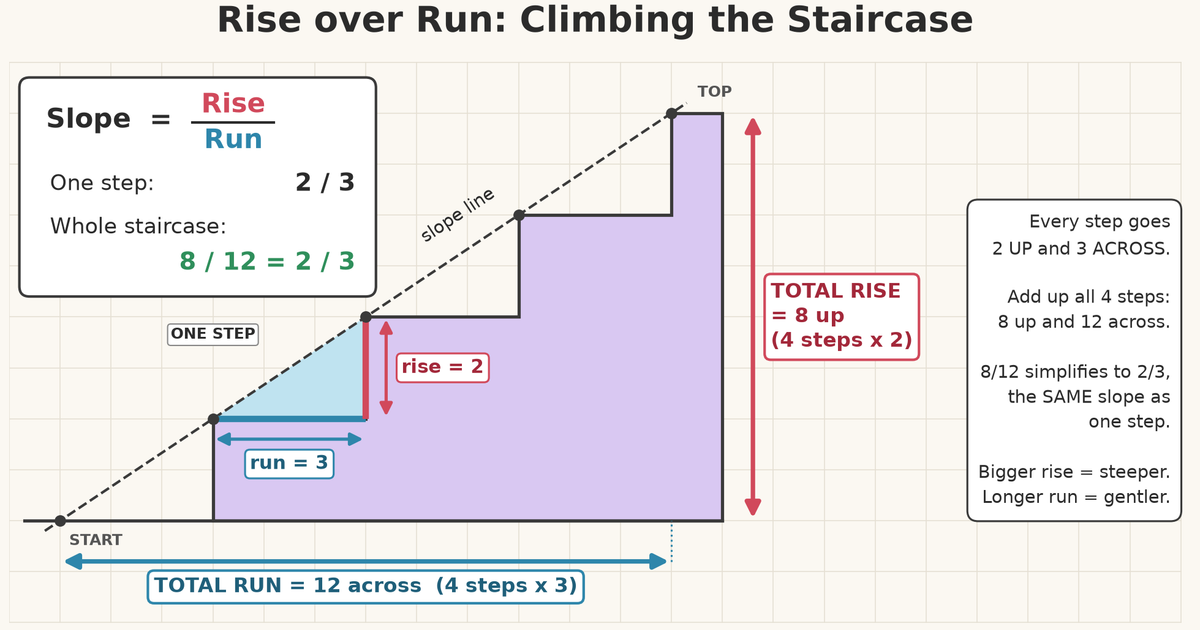
What the numbered sequence gave us was a framework for thinking about how complexity builds on itself. Each band in our curriculum is not just harder than the one before it — it contains the one before it, the way each number in the sequence contains the sum of the two that preceded it. Posture is in every skill. Rise over run is in every approach. Active tension is in every movement. Control is in everything.
The AI framing gave us permission to be systematic about something that is usually taught by intuition. Great coaches have always known how to develop control in their gymnasts. But they often cannot fully articulate why they do what they do, because the knowledge lives in their hands and their eyes rather than in a framework they can explain. We wanted to build the framework — not to replace the intuition, but to make it teachable.
Control is where that framework becomes most visible. Because control is not a single skill. It is the meta-skill — the ability to manage all the other skills deliberately. And that is exactly the kind of thing that benefits from being thought about carefully, systematically, and with a willingness to ask strange questions.
What Control Teaches Beyond the Gym
The gymnast who develops real control — who learns to manage force, direction, and timing deliberately — is learning something that has almost nothing to do with gymnastics.
They are learning that outcomes are not just the result of effort. They are the result of directed effort. That working hard in the wrong direction is not the same as working hard in the right one. That timing matters as much as intensity. That the body's ability to feel what it is doing is as important as its ability to do it.
These are not gymnastics lessons. They are lessons about agency — about the difference between things happening to you and things you make happen.
A gymnast who has learned control does not just execute skills. They manage them. They feel the difference between a rep that worked and a rep that almost worked. They know what to adjust and why. They are not waiting for the coach to tell them what happened. They are already figuring it out.
That gymnast will be fine. In the gym and everywhere else.
The Arc, Continuing
This series has been building a picture of what gymnastics actually teaches — not the flips, not the medals, but the underlying skills that make a person capable of learning hard things.
Posture gave us the foundation: the body's home position, the zero point everything returns to. Rise over run gave us the approach: how effort and direction combine to create outcomes. Active tension gave us the engine: the organized body that transmits force instead of losing it. The landing gave us the finish: how you complete things is how you are.
Control is the thread that runs through all of them. It is what turns a collection of skills into a practice — something you can return to, refine, and build on indefinitely.
The thought experiment continues. And so does the training.
At Twisters Gymnastics, we are always asking the question: what does it actually take to develop a great gymnast? Control is one of the most honest answers we have found. Come see what it looks like in practice.
Ready to enroll a gymnast who truly understands their sport? Enroll at Twisters Gymnastics and see the difference coaching with intention makes.
Explore Topics
Written by
Allan Fusilero, Owner of Twisters Gymnastics — with research assistance from Grok, Perplexity, and ChatGPT
Content creator and writer sharing insights and stories.